

University of Alberta advances two candidates beyond its original shortlist
At a Glance
- 2 additional candidates advanced after being absent from the faculty’s initial shortlist
- 3 of the faculty’s 4 initial selections were also top-ranked by Alex
- About 30 applicants evaluated in a single hiring cycle
A stronger shortlist starts with hearing more candidates
The University of Alberta’s Civil and Environmental Engineering department found two promising candidates its initial CV review had missed. After Alex interviewed applicants for a specialized Ph.D. position, the faculty brought both into the next stage of consideration.
The role called for an unusual combination of expertise in civil engineering and dentistry. Finding that interdisciplinary fit meant looking beyond familiar credentials to understand how an applicant’s knowledge matched the work. A CV that did not closely follow the advertisement could make relevant experience difficult to recognize.
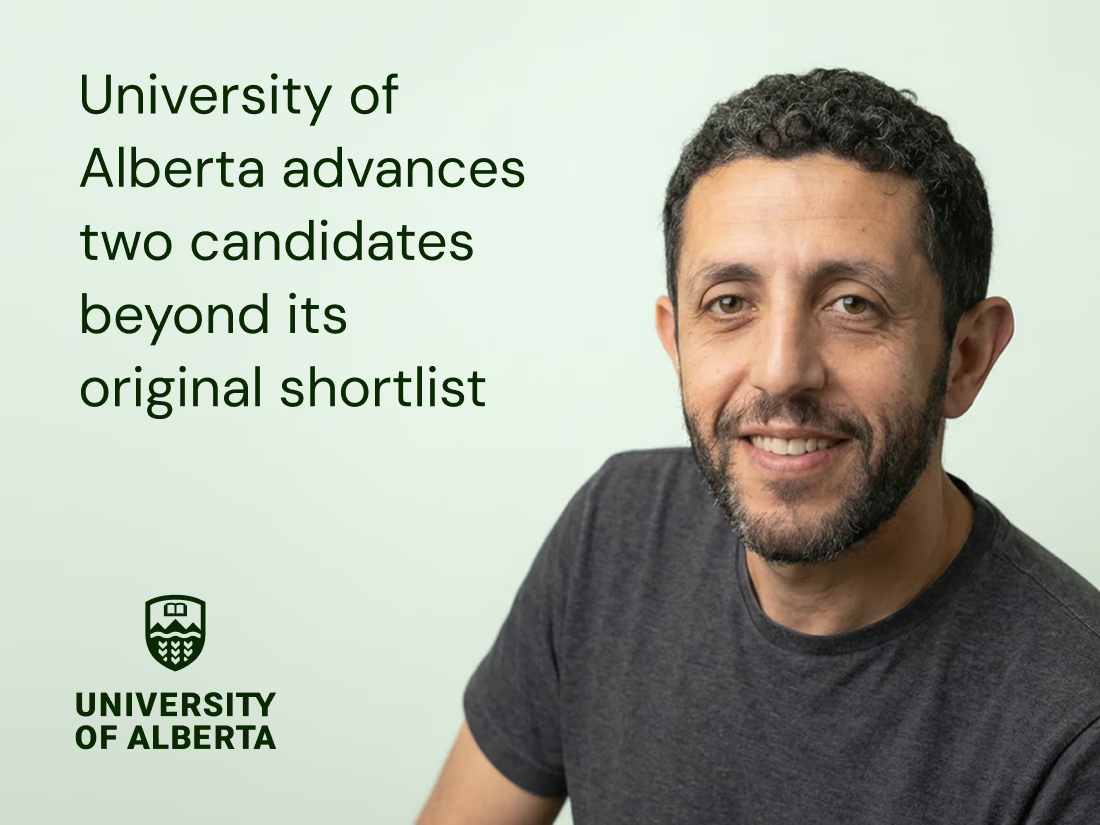
Samer Adeeb, Chair of Civil and Environmental Engineering, describes the result: “Alex surfaced two strong candidates we had not shortlisted from their CVs. We moved forward with both.”
Give each applicant an interview against the role’s criteria
The department had about 30 applications to evaluate. Faculty members needed to apply nuanced academic and technical judgment across that pool, a process that placed substantial demands on their time.
The team compared its existing manual screening process with an Alex-supported approach in the same hiring cycle. Professors supplied the job description, which Alex used to create a tailored interview and scoring rubric. Alex then interviewed applicants, evaluated their responses against that rubric, and produced a ranked shortlist.
The workflow added spoken responses to the information available in written applications. It also handled outreach and interview scheduling, giving faculty a set of completed interviews and assessments to consider alongside their own review.
For this interdisciplinary search, that additional evidence mattered. The department could examine how candidates answered questions about the work, including candidates whose CVs had not initially made them obvious choices.
Compare the shortlists, then look beyond the overlap
Three of the four candidates initially shortlisted by professors were also among Alex’s top-ranked applicants. The comparison gave faculty a clear view of where the two approaches pointed toward the same people.
The most useful discovery came outside that overlap. Alex surfaced two additional applicants who performed well in interviews, and the faculty advanced both after reviewing that evidence.
A stronger shortlist for a specialized search
For the interdisciplinary Ph.D. position, Alex gave faculty interview evidence across the applicant pool before they finalized whom to advance. That provided another way to recognize relevant expertise beyond the written application.
The result was concrete: two candidates missing from the original shortlist earned further consideration after their interviews. Faculty had a broader set of strong applicants to evaluate for a role requiring an uncommon combination of disciplines.
Alex’s contribution was visible in the selection itself. The department moved forward with people its initial CV review had not identified.
Our latest posts
The latest news, interviews, and resources.


Stay ahead of the crowd
Subscribe to our official company blog to get notified of exciting features, new products, and other recruiting news ahead of everyone else.