

Culture add over culture fit
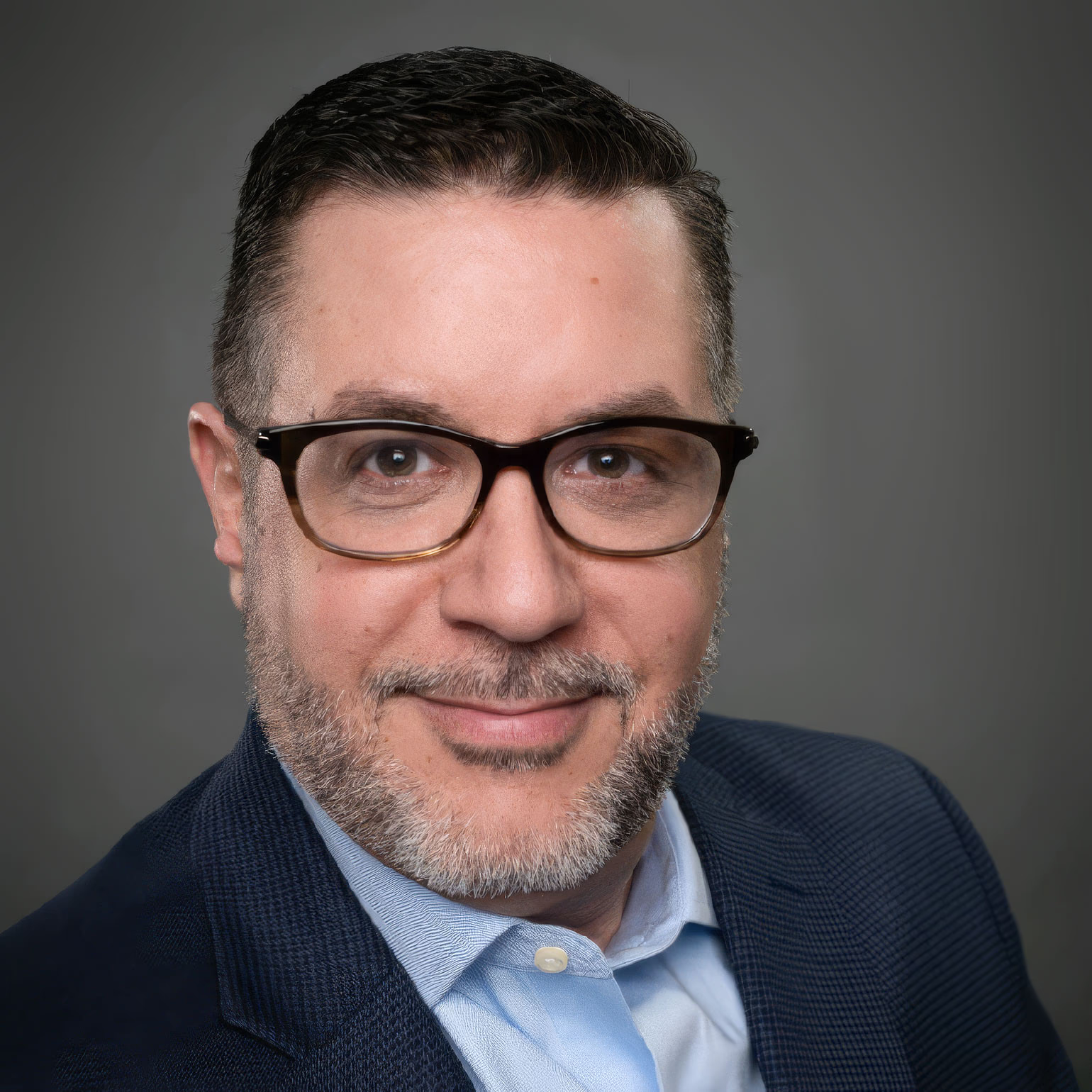
A conversation with Anthony Pacilio, Chief Inclusion Officer at F90 Solutions.
Spotlight is our series on the people shaping the future of hiring and talent. We ask them how they work, what they believe, and where AI actually helps.
This time we spoke with Anthony Pacilio, a recognized leader in neurodiversity employment and inclusive hiring practices.
Anthony established and led the global Autism at Work program at JPMorganChase, then served as VP of neurodiverse solutions at CAI, scaling neurodiversity initiatives globally. He has spoken at more than 200 industry conferences and podcasts on inclusive talent strategies. As chief inclusion officer at F90 Solutions, he continues to advance hiring practices that identify and develop overlooked talent.
What advice would you give to someone starting out in hiring or talent?
Start by learning how to truly listen to candidates. Hiring isn't about filling seats. It's about understanding people, potential, and context. Spend time with the communities you're trying to serve, learn how different candidates experience the hiring process, and design your practices around fairness, clarity, and dignity. The best talent professionals build trust before they build pipelines.
What is a hiring belief you hold that most people would challenge?
That "culture fit" is often code for comfort and familiarity, not performance. I believe in culture add. High-performing teams are built by people who think differently, challenge assumptions, and bring diverse lived experiences. The discomfort of difference is often where innovation lives.
What concerns you most about using AI in hiring?
That we automate bias at scale. If AI is trained on biased historical data, it will replicate and even amplify inequity. The danger isn't AI itself. It's deploying it without accountability, transparency, and diverse human oversight. Efficiency without ethics is a risk we can't afford.
How can AI make recruiters better, not just faster?
By removing administrative noise so recruiters can spend more time being human, coaching candidates, partnering with hiring managers, and building inclusive hiring strategies. AI should enhance judgment, not replace it. Used well, it can surface hidden talent and reduce friction in the process.
What would "humane AI" in hiring look like to you?
Humane AI is transparent, auditable, and designed with inclusion in mind from day one. It respects candidate dignity, allows for human override, and is continuously tested for bias and unintended harm. Most importantly, it's built to expand opportunity, not just optimize efficiency. Humane AI should serve people, not sort them out of opportunity.